

What the Latest Policy and Voting Updates Mean for AAPI Voters
Birthright Citizenship Oral Arguments Update
Justices considered arguments on whether children born in the U.S. to certain immigrant parents are entitled to citizenship, with a decision expected later this summer.
New Voter Data Push Raises Alarms: Legal Battles are Already Underway
New federal efforts to collect and share voter registration data, alongside state-level lawsuits over voter purges, are raising concerns about privacy, accuracy, and access to the ballot box.
New Jersey Assembly Passes Voting Rights Act, Expanding Protections and Setting a Model for Other States
The New Jersey Assembly has passed a voting rights bill aimed at preventing discrimination, expanding language access, and strengthening protections for communities including AAPI voters.
Virginia Governor Directs State to Rejoin ERIC
Governor Abigail Spanberger has directed Virginia to rejoin ERIC to improve voter roll accuracy, as voters also weigh an April 21 ballot measure on congressional redistricting.
OMB SPD15 Stalled in Trump Admin, Delayed Longer
The Office of Management and Budget has extended timelines for updated race and ethnicity data standards, slowing the rollout of changes intended to better reflect the nation’s diversity.
Voting in 2026: How Voting Systems Work
In our next segment of our Voter Education Series, we cover how votes are counted, the differences between voting systems, and what that means for your voice in elections.
See a List of upcoming elections by states:
April 7 – GA: U.S. House District 14 Special Runoff
April 7 – WI: State Supreme Court
April 16 – NJ: House Special to replace Rep. Mikie Sherrill, now Governor
April 21 – VA: Redistricting Ballot Measure
Birthright Citizenship Oral Arguments Update
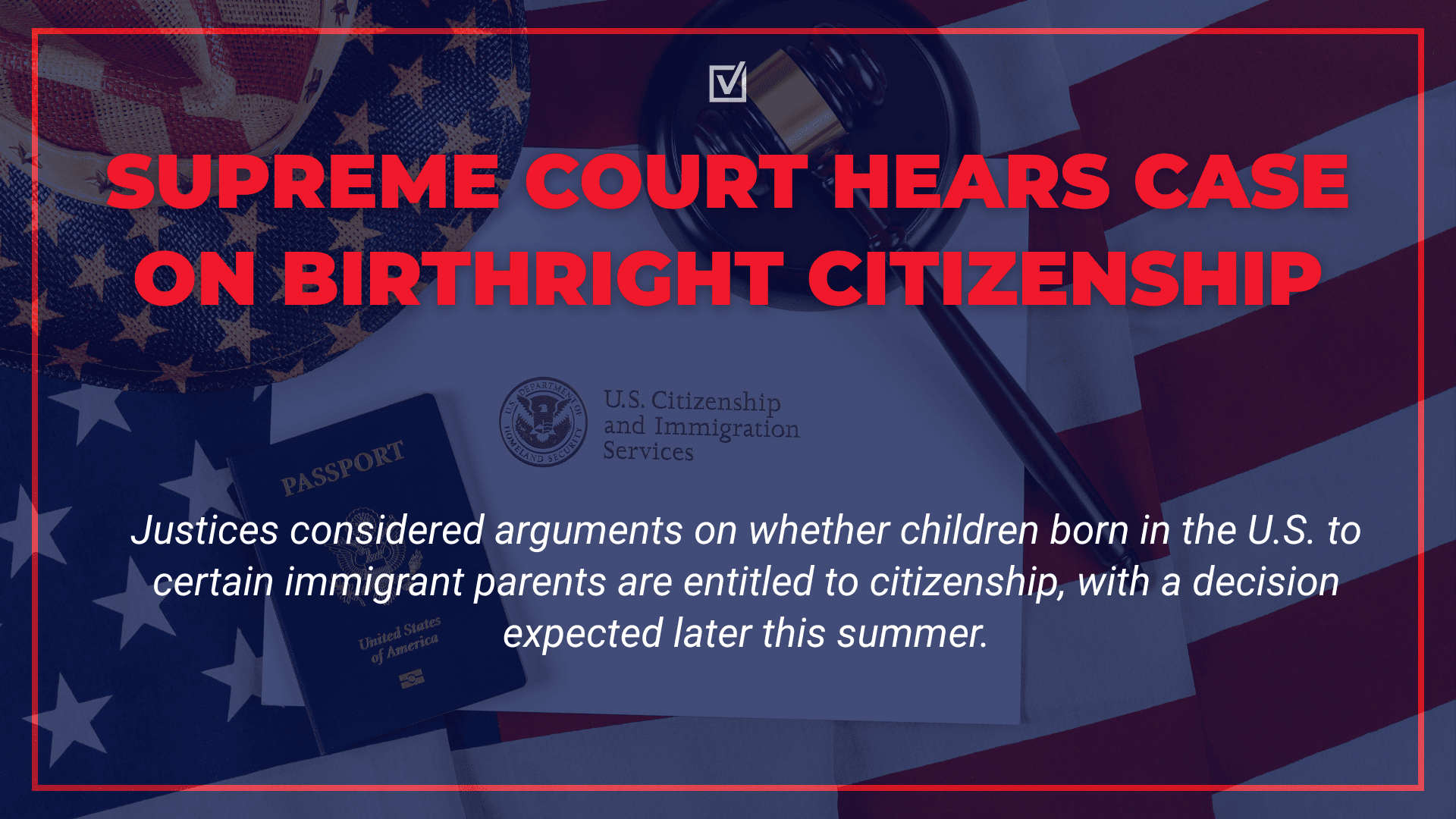
At the highly anticipated oral arguments on April 1, 2026, the Supreme Court heard a major constitutional challenge to the Trump administration’s effort to restrict birthright citizenship under the Fourteenth Amendment and federal law. The government’s case to end birthright citizenship was argued by United States Solicitor General D. John Sauer. Cecillia Wang, the National Legal Director of the American Civil Liberties Union (ACLU) argued in support of preserving the constitutional principle of birthright citizenship.
The government’s position is that children born in the U.S. to temporary-status immigrants, which would include the undocumented, are not “subject to the jurisdiction” of the United States and therefore are not entitled to automatic citizenship. Attorney Wang argued that to end would upend a foundational constitutional guarantee and potentially deny citizenship to hundreds of thousands of children each year, creating a large class of people born in the U.S. without legal status. The justices probed each side on the archaic meaning of terms such as, “sojourner”, “domicile” and “allegiance”.
There was a particularly interesting issue raised by Justice Jackson on the question of allegiance. She pointed to an amicus brief which illustrated that during WWII when the federal government confined Japanese Americans in camps throughout the US the issue of “allegiance” never came up for children born in those camps. These children were afforded birthright citizenship even in cases where the parents were foreign nationals, classified as enemy aliens or had renounced the US citizenship. If allegiance of the parents were truly a constitutional requirement for birthright citizenship, one would imagine it would be invoked during a time of war.
Commentators have noted that many of the justices seemed skeptical of the government’s arguments to end birthright citizenship. The outcome of this case will likely not be issued until the end of June or early July at which time we will learn whether that skepticism was enough to preserve birthright citizenship.
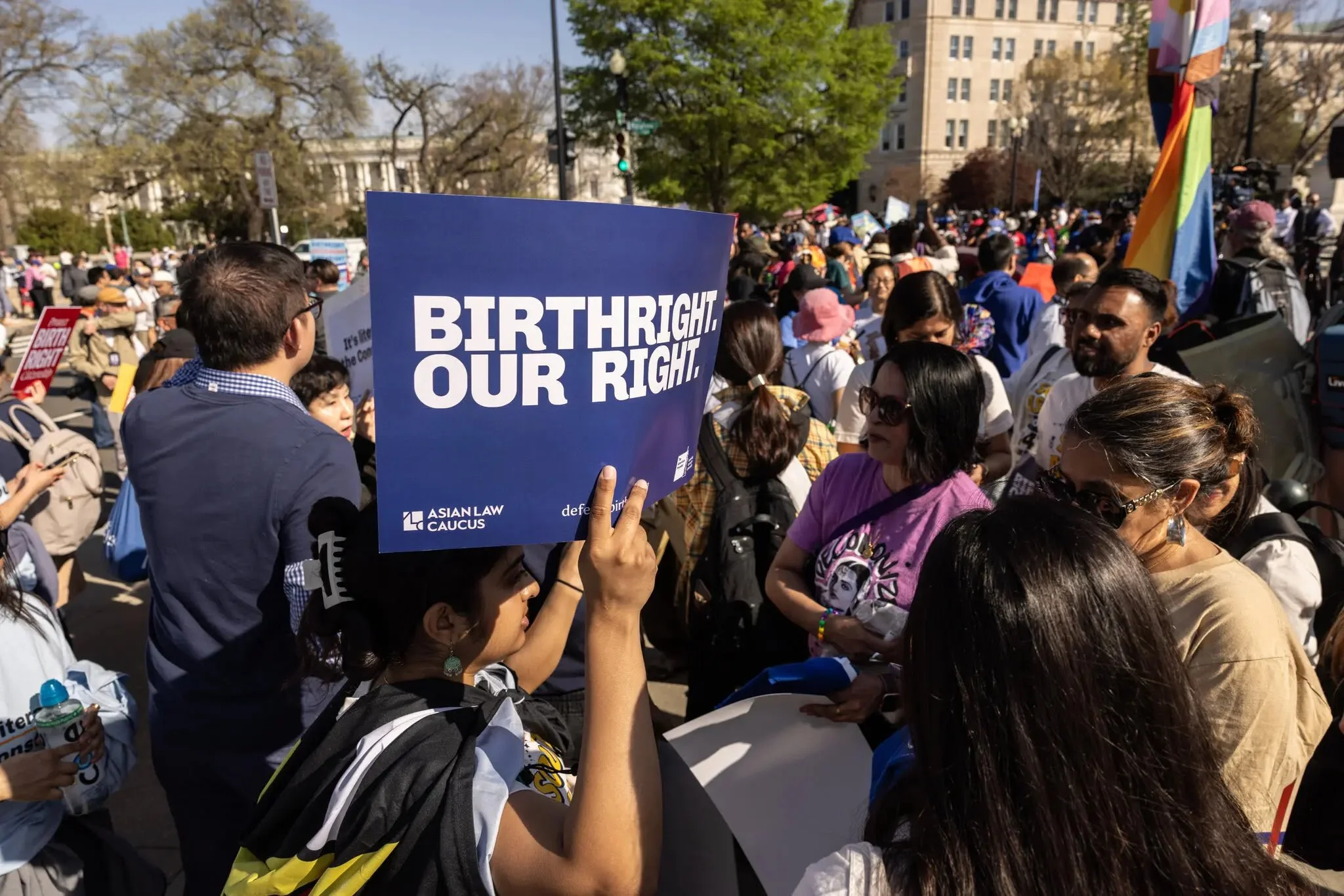
You can read APIAVote’s statement on the case here, and see coverage from the day of oral arguments in the New York Times, where our team was present, as communities came together at the Supreme Court to defend birthright citizenship.
New Voter Data Push Raises Alarms: Legal Battles are Already Underway
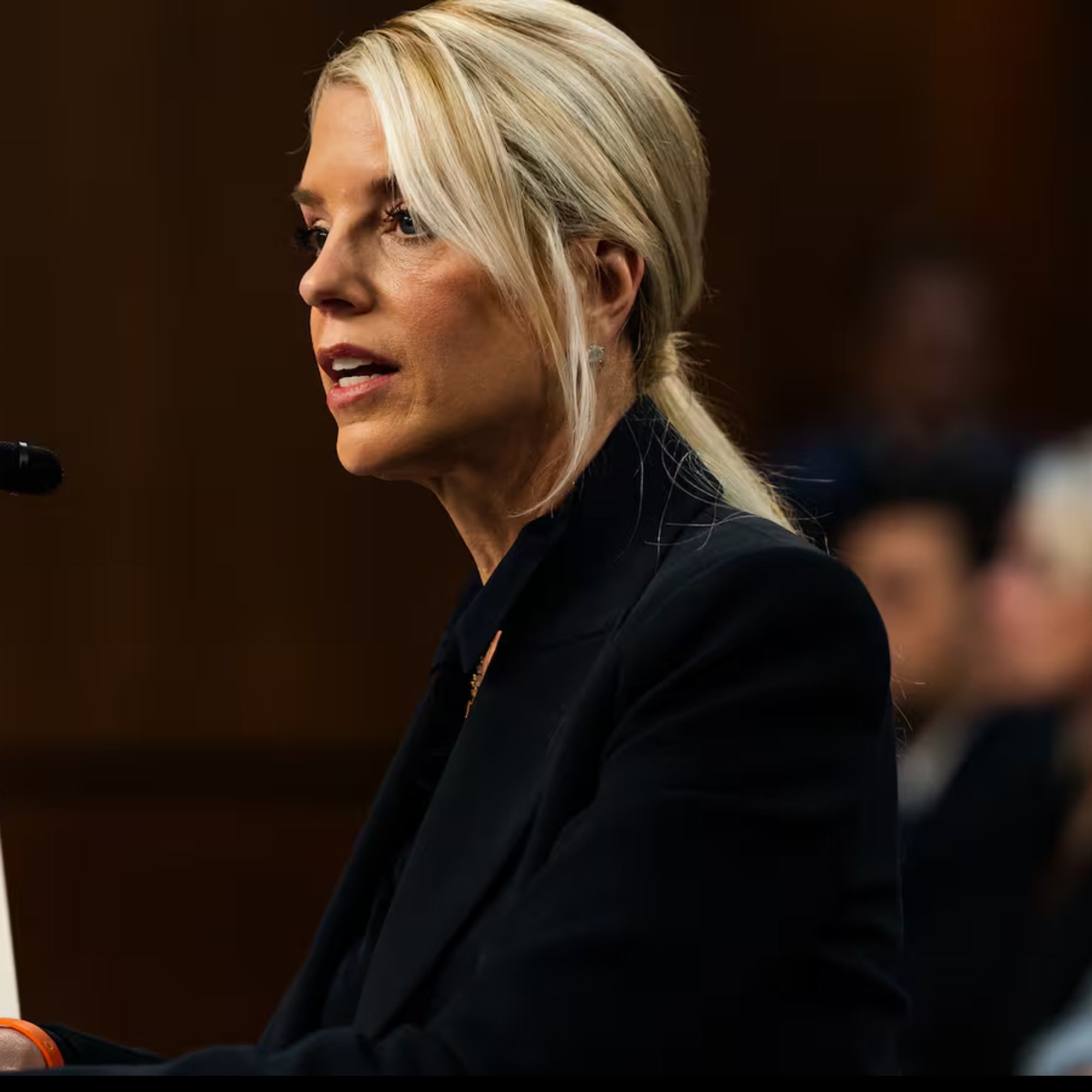
The fight over voter data is intensifying nationwide, and its consequences are already playing out.
The Department of Justice is continuing its sweeping effort to collect detailed voter registration data from states, and recently stated that it plans to share voter registration data it gets from states with the Department of Homeland Security. Officials say the data could be used in immigration-related investigations—an unprecedented move that has raised concerns among election experts and civil rights advocates.
Critics warn that this effort could create a national voter database and expose sensitive personal information, including partial Social Security numbers and driver’s license data, while blurring the line between election administration and immigration enforcement.
A number of states, including Texas and Louisiana, have run their voting lists through DHS’s new citizenship lookup tool system, Systematic Alien Verification for Entitlements (SAVE), and found very small numbers of potential noncitizens on their rolls. Some U.S. citizens have also been inaccurately flagged by SAVE, which has compounded concerns by voting rights advocates that its use will disenfranchise eligible voters.
At the same time, the risks of how voter data is used are already visible on the ground.
Last week, voting rights advocates filed a lawsuit in Texas challenging what they describe as an illegal voter purge. The lawsuit argues that eligible voters were wrongly flagged and removed from the rolls, raising concerns about flawed data matching and the disenfranchisement of lawful voters. According to plaintiffs, the state is relying on data from SAVE that is outdated, disproportionately impacting citizens who have been recently naturalized.
These two developments point to a broader trend: as efforts to collect and analyze voter data expand, so do the risks of inaccurate removals, privacy violations, and barriers to the ballot box.
New Jersey Assembly Passes Voting Rights Act, Expanding Protections and Setting a Model for Other States
Last month, the New Jersey General Assembly approved the New Jersey Voting Rights Act, also known as theJohn R. Lewis Voter Empowerment Act of New Jersey. The proposal represents a major step toward strengthening protections against voter discrimination and improving access to the ballot.
The measure creates state‑level voting safeguards inspired by the federal Voting Rights Act. It would bar discriminatory practices, such as tactics that weaken the voting power of racial or ethnic groups, expand language assistance for voters who are not fluent in English, and establish a preclearance system. Under that system, jurisdictions with a documented history of discriminatory changes to voting rules would need state approval before implementing new policies.
For Asian American and Pacific Islander (AAPI) voters, the legislation could be especially meaningful. Many AAPI voters rely on translated election materials, language assistance, and fair district maps to take part in the political process. By strengthening protections against vote dilution and expanding access to in‑language resources, the measure would help ensure that AAPI voters, especially those with limited English proficiency, can cast ballots and have their political voices reflected in representation.
Supporters also view New Jersey’s move as part of a growing national pattern. As federal voting protections have weakened, more states are adopting their own voting rights laws. If enacted, New Jersey’s bill could become a model for other states with rapidly diversifying populations, including those with sizable AAPI communities, seeking to improve equity and accessibility in their election systems.
The legislation now heads to the New Jersey Senate for further consideration. In a statement from a coalition led by the New Jersey Institute for Social Justice, advocates emphasized the urgency of the legislation and its impact on communities of color. “We look to the Senate to ensure the strongest possible version of the bill reaches the governor’s desk, including expanded language access and robust enforcement,” said Amber Reed, said Amber Reed, Co-Executive Director of AAPI New Jersey.
Virginia Moves to Rejoin ERIC Voter Data System
Virginia Governor Abigail Spanberger has directed the state to begin the process of rejoining the Electronic Registration Information Center (ERIC), a multi-state partnership that helps maintain accurate voter registration rolls through data sharing. State lawmakers have also passed legislation requiring the state to rejoin the system.
The Electronic Registration Information Center, or ERIC, is a collaborative system in which states share voter registration data to improve accuracy. Its purpose is to help ensure voters are registered in only one state and to support outreach to eligible but unregistered residents. States compare data such as death records, address changes, and duplicate registrations using sources like motor vehicle records, Social Security death data, and information from other member states.
Virginia was a founding member of ERIC in 2012 under Governor Bob McDonnell but withdrew in 2023 under Glenn Youngkin, citing concerns about data privacy and system governance. The move to rejoin reflects a shift in how the state approaches voter list maintenance. More than 20 states and Washington, D.C. currently participate.
For AAPI communities, systems like ERIC can support access by helping identify eligible but unregistered voters, including many naturalized citizens. Accurate voter rolls and targeted outreach, especially when paired with in-language resources, can help reduce barriers to registration and participation.
Virginia voters are also weighing a statewide ballot measure that would amend the state constitution on the issue of congressional redistricting. If approved, it would open the door for adjustments to district boundaries before the 2026 elections. Backers say the change is meant to respond to shifting maps in other states, while critics worry it could sidestep the current process that aims to keep map‑drawing more independent. Early voting has already begun, and Election Day is set for April 21.
OMB SPD15 Stalled in Trump Admin, Delayed Longer
The Office of Management and Budget (OMB)announced on March 27 that it is further extending the timeline for federal agencies to implement updates to the Statistical Policy Directive No. 15 (SPD 15), which standardizes how federal agencies collect and report race and ethnicity data.
In their announcement, OMB stated that deadlines for action plans from federal departments and agencies have been extended to March 28, 2027. It also noted that the revised standards remain in effect with no additional changes. The timeline had previously been extended in September 2025, when OMB set action plans to be submitted by March 28, 2026, and required full compliance by March 28, 2029.
The revisions to SPD 15 were announced two years ago under the Biden administration, becoming the first major revisions to the standard since 1997. Among the many changes to SPD 15 are the combination of the once-separate race and ethnicity questions into a single question, allowing respondents to select multiple categories with which they identify, and the addition of ‘Middle Eastern and North African’ (MENA) as a distinct category from ‘White’, alongside updates to terminology and data collection. These revisions were intended to improve data accuracy and better reflect the nation’s diversity.
This delay comes amidst a broader and ongoing conflict between the Trump administration and the Census Bureau’s operations as the 2030 Census nears. In December 2025, the administration indicated that they would conduct a review of the SPD 15 changes, sparking concerns over a potential rollback of the policy. Experts argue that the changes being made to the Census could hinder not just data equity and accuracy, but can also produce inaccuracies that could impact apportionment, redistricting, and voting rights, all of which rely on Census data.
Voting in 2026: How Voting Systems Work
The 2026 midterm elections are now in full swing, and one thing that may surprise voters is that not all elections are run the same way. Depending on where you live, the way votes are counted and winners are decided can look very different. These systems shape how candidates campaign, how votes are counted, and ultimately, who represents your community.
Understanding how these systems work can help you feel more confident going into Election Day and ensure your vote is counted the way you expect.
What Is Ranked-Choice Voting?
One system that has gained attention in recent years is ranked-choice voting, often referred to as RCV. Instead of choosing just one candidate, voters rank candidates in order of preference. If no candidate receives a majority of first-choice votes, the candidate with the fewest votes is eliminated, and those votes are redistributed based on voters’ next choices. This process continues until one candidate reaches a majority.
Ranked-choice voting is currently used in places like Alaska and Maine for certain elections, and in some cities across the country. Supporters say it can encourage more diverse candidates to run and reduce the need for separate runoff elections. It can also give voters more flexibility to support candidates who reflect their views without feeling like they are “wasting” their vote.
Learn more about how ranked-choice voting works in practice.
What Is Traditional Voting?
Most elections in the United States use what is known as plurality voting. In this system, voters select one candidate, and the candidate with the most votes wins, even if they do not receive more than half of the total votes.
This approach is used in most federal and state elections. While it is straightforward and familiar, it can sometimes result in a candidate winning without majority support, especially in crowded races with multiple candidates.
Why Do Voting Systems Differ?
States and local governments have the authority to decide how their elections are conducted, which is why voting systems vary across the country. Some jurisdictions adopt ranked-choice voting to increase voter choice or reduce polarization, while others maintain plurality systems because they are simpler to administer and widely understood.
These decisions are often shaped by state laws, local ballot initiatives, and broader policy debates about how to make elections more accessible and representative. Other factors such as redistricting also play a role in shaping elections by determining how communities are grouped into voting districts. Together, these systems influence not just how votes are counted, but how communities are represented.
Why This Matters for AAPI Communities
For AAPI communities, understanding how voting systems work is especially important. The way elections are structured can impact whether communities have a meaningful opportunity to elect candidates who understand their experiences and needs. Systems that expand voter choice or promote fair representation can help ensure that diverse voices are heard, while changes to district boundaries or election rules can shape how communities are grouped and represented.
Being informed about these systems helps voters make more intentional choices and advocate for processes that reflect their communities.
Looking Ahead
As more states and cities consider changes to how elections are run, staying informed about your local voting system is key. Take time to learn how elections are conducted where you live so you can participate confidently and effectively.
You can use this resource to find out how elections work in your state and community. View a list of upcoming elections. See where ranked choice voting is being used here. Additionally, view our NYC Ranked Choice Voting video below:
Deadline Approaching: Apply to Become an APIAVote Ambassador

Want to make an impact and create true change? Check out our 2026-2027 Youth Ambassador Program below:
What is an APIAVote Ambassador?
APIAVote Ambassadors are representatives of AAPI student organizations across the country, who are interested and passionate about wanting to develop their collective leadership skills and build local community power.
APIAVote Ambassador Program Goals
Inspire a new generation of young AAPI leaders who will transform their campus, their community, and the world.
Provide trainings, resources, and guidance on how to be an effective leader on their campus and community through the lens of organizing and democracy/civic engagement.
Connect students with APIAVote community partners, other local student voting nonprofits, and on-campus voting groups so they get the local expertise needed to be successful.
Develop a strong nationwide network of AAPI student organizations to connect, organize, and make the change they want to see.
Deadlines and Timelines
Application Deadline: Friday, April 17th 2025
Interviews are conducted between: April 21st-May 5th
Acceptances will be sent out on the week of May 18th
Apply Today! If you have any questions, comments, or concerns – feel free to contact Kareena Salvi at youngvoters@apiavote.org!
